🌐 25 Years of Digital Transformation: From Early Web Portals to AI-Supported Modular Commerce
Updated: Dec 16, 2025
Digital transformation is often framed as a technological shift, but its deeper trajectory is architectural. Over the past 25 years, the evolution of online platforms has mirrored global changes in cognition, commerce, and collaborative intelligence. The progression from early web portals to AI‑supported modular systems illustrates how geography, material knowledge, and system design converge to shape next‑generation digital ecosystems.
This article examines that evolution through five analytical lenses: geographical cognition, platform eras, collaborative intelligence, material lineage, and modular system architecture.
Globalisation as a Cognitive Framework for Digital Transformation
Globalisation is not a new topic. The United Nations has long advocated for global recognition of its importance, emphasising how interconnected systems shape economies, cultures, and digital infrastructures. In today’s world, many individuals carry multiple nationalities or move fluidly between regions, embodying the lived reality of globalisation.
Public discourse often focuses on the defects or darker consequences — cultural dilution, economic imbalance, or identity fragmentation. Yet globalisation also contains a powerful, under‑examined potential: when individuals intentionally customise their own blend of global experiences, globalisation becomes a transformative cognitive asset rather than a structural threat.
This blog post presents such a transformation. In this case study, the evolution of a 25‑year digital journey is analysed through five lenses to demonstrate how personalised globalisation can shape digital thinking, platform design, and system architecture.
The Digital Transition Case Study
This article positions the 25‑year journey as a case study in digital transition, examining how online platforms evolve under the combined pressures of globalisation, technological change, and shifting cognitive frameworks. The analysis is structured through five interconnected lenses that together map the architecture of digital transformation:
Geographical cognition — how cross‑border environments shape digital thinking
Platform eras — how each technological period redefines what online systems can be
Collaborative intelligence — the emergence of AI‑supported workflows as a new operational paradigm
Material lineage — how industry‑specific knowledge informs digital product logic
Modular system architecture — the structural principles that enable scalable, symbolic commerce
Taken together, these lenses demonstrate how digital evolution is not linear but systemic, shaped by geography, technology, materials, and the integration of human and machine intelligence.
(1) Geographical Cognition: How HK, US, and UK Shape Digital Thinking
Experiencing life and work across Hong Kong, the United States, and the United Kingdom creates a tri‑modal cognitive framework that directly influences digital strategy and system design. This framework emerges not from isolated moments, but from the blended fluency that globalisation produces — the ability to think, decide, and design through multiple cultural logics simultaneously.
Each geography contributes a distinct experiential layer:
🟣 Hong Kong — High‑Velocity Operational Precision
From Hong Kong: How Does High‑Velocity Operational Precision Shape Your Thinking?
Hong Kong provides a high‑velocity, efficiency‑driven experience shaped by dense markets and rapid commercial cycles. This environment trains a sensitivity to speed, pattern recognition, and immediate iteration. Hong Kong’s commercial environment is defined by rapid decision cycles, dense information flow, and efficiency under pressure. This cultivates:
accelerated pattern recognition
rapid prototyping and iteration
operational clarity in high‑speed environments
These traits align with early‑stage digital experimentation and agile development.
🟣 United States — Expansion, Reinvention, and Platform‑Level Ambition
From the United States: How Do Expansion, Reinvention, and Platform‑Level Ambition Shape Your Digital Imagination?
The United States contributes an experience of scale, reinvention, and platform‑level ambition. Exposure to US digital culture encourages experimentation, category creation, and the willingness to expand ideas beyond their initial boundaries. The US ecosystem encourages large‑scale thinking and reinvention. This fosters:
comfort with scaling digital ecosystems
experimentation across categories
platform‑driven business models
This mindset aligns with global e‑commerce and cross‑border digital operations.
🟣 United Kingdom — Structural Reflection and Long‑Term Architecture
From the United Kingdom: How Does Structural Reflection and Long‑Term Architecture Influence the Way You Build Systems?
The United Kingdom adds an experience of structure, governance, and long‑term architectural thinking. UK systems emphasise clarity, documentation, and sustainable frameworks — essential for building durable digital infrastructures. The UK environment emphasises governance, systemisation, and intentional design.
This contributes:
long‑term structural planning
disciplined framework development
emphasis on clarity, documentation, and sustainable architecture
Together, these three geographies create a speed–scale–structure cognitive model that supports modern digital transformation. And this raises an important question for every reader: What is your own blended cultural background — and how might you extend it? Globalisation makes cognitive identity customizable; when intentionally shaped, it becomes a powerful asset rather than a passive inheritance.
2. Platform Evolution: A 25‑Year Timeline of Digital Commerce
Across the past quarter‑century, the evolution of e‑commerce platforms mirrors the broader technological shifts of the internet. Each era required a different set of practical tools, cognitive skills, and design expectations — shaping how individuals built, maintained, and scaled their online presence.
Early digital commerce demanded technical craftsmanship:
HTML, CSS, JavaScript, and Photoshop formed the core toolkit
Creators hand‑built layouts, coded interactions, and designed every visual element manually
Digital stores were essentially custom micro‑websites, crafted line by line
The next era introduced WYSIWYG editors, lowering the barrier to entry:
Drag‑and‑drop interfaces replaced raw code
Creators shifted from “building” to “assembling”
The focus moved from technical execution to visual logic and usability
Then came the rise of WIX, Shopify, and other template‑driven ecosystems:
Platforms offered pre‑structured commerce logic
Payment systems, inventory tools, and mobile responsiveness became built‑in
Creators adapted by learning configuration, optimisation, and brand differentiation rather than technical construction
Today, we enter the era of AI‑assisted commerce, where the tools themselves become collaborators:
AI supports product photography, copywriting, SEO, and system architecture
Creators focus on strategy, emotional resonance, and modular design
The workflow shifts from “building a store” to co‑designing an intelligent ecosystem
This progression — from hand‑coded pages to AI‑supported platforms — illustrates how digital commerce is shaped not only by technology, but by the evolving tools that mediate human creativity and operational logic.
====
In this case study, four online platforms spanning 25 years illustrate the major technological eras of the internet and the evolving tools that shaped digital commerce. Each platform represents more than a website; it reflects a distinct moment in the history of online creation — from hand‑coded pages to template‑driven ecosystems and, finally, to AI‑assisted collaboration.
Across this timeline, the tools themselves become a record of digital transformation. Early creators relied on HTML, CSS, JavaScript, and Photoshop, crafting every element manually. The rise of WYSIWYG editors shifted the focus from coding to visual assembly. Platforms like WIX and Shopify introduced pre‑built commerce logic, enabling creators to scale without technical barriers. Today, AI‑supported systems redefine the workflow entirely, turning digital platforms into intelligent collaborators rather than static tools.
By examining these four platforms, we can trace not only the evolution of technology but also the evolution of digital thinking — how creators adapt, how systems mature, and how globalised experience shapes the architecture of modern online ecosystems.
🔘 2000 — Games.hongkong.com (original site inactive; accessible via web archive)
A representative of early web portal culture. Key characteristics of this era:
static HTML pages
directory‑style navigation
high‑traffic content hubs
minimal user interaction

🔘 2006 — Magzila.com (original site inactive; accessible via web archive)
Part of the first wave of e‑commerce 1.0. This period introduced:
CMS‑driven product catalogues
early SEO practices
basic checkout systems
the rise of online product curation
Web Archive: https://web.archive.org/web/*/http://magzila.com
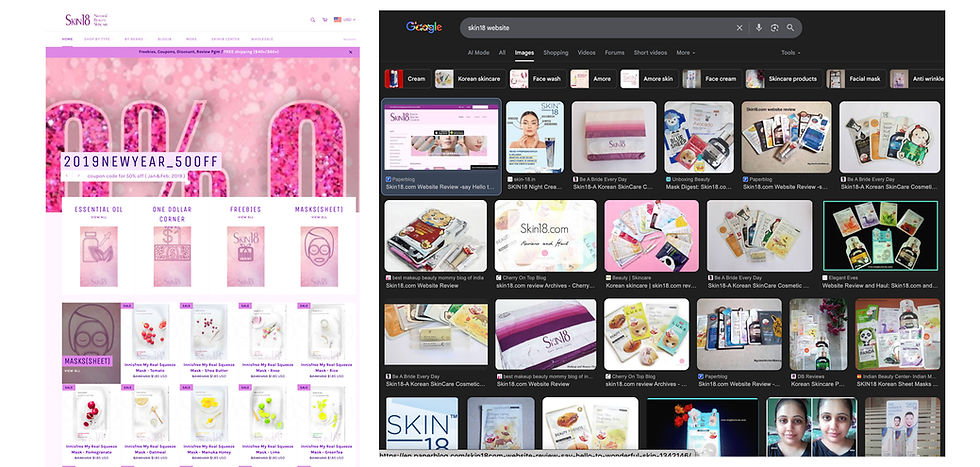
🔘 2016 — Skin18.com (original site inactive; restored through web archive for viewing purposes)
A globalised e‑commerce platform operating during the rise of social commerce. This stage required:
cross‑border logistics
influencer‑driven acquisition
high‑volume SKU management
content‑driven conversion funnels
Open path for online presents which still exist after 10 years, try it > google skin18
Web Archive: https://web.archive.org/web/*/http://skin18.com
🔘 2026 — JewelHub.co.uk (conceptual planning initiated in 2025 for system architecture)
JewelHub™ is not a traditional jewellery store; it is an online collaborator built around five interconnected jewellery systems. Developed over the course of a full year, the platform was architected through iterative planning, modular design, and AI‑supported structuring. JewelHub™ represents a shift from retail to intelligent collaboration — transforming jewellery into a symbolic, co‑designed ecosystem where human intuition and AI structure operate in parallel.
The launch of JewelHub™ marks the beginning of the AI‑assisted era of digital commerce. Built on modular system architecture, symbolic product logic, and collaborative intelligence, JewelHub™ integrates human intuition with AI‑supported structure to create clarity, emotional resonance, and scalable design. This platform represents both the culmination of 25 years of globalised digital experience and the transition from traditional e‑commerce into intelligent, co‑designed ecosystems — transforming jewellery from a product into a living, adaptive system. A next‑generation modular commerce system supported by AI‑driven collaborative intelligence. This era focuses on:
symbolic product systems
modular catalogue architecture
emotional logic modelling
AI‑supported content and operational workflows
Web Archive: https://web.archive.org/web/*/http://jewelhub.co.uk
Across these platforms, the macro‑shift is clear:
content → commerce → community → collaborative intelligence.
3. JewelMind™: Collaborative Intelligence as Digital Infrastructure
JewelMind™ is the AI collaborator that underpins the entire JewelHub™ ecosystem.
It is not a chatbot, not a tool, and not an automation script. JewelMind™ functions as a digital thinking partner — an embedded intelligence that helps design, organise, and maintain the five jewellery systems that make up JewelHub™.
In practical terms, JewelMind™ acts as a structural and cognitive layer inside the business.
It supports decision‑making, maintains brand clarity, models emotional logic, and documents the architecture of the system as it evolves. Instead of replacing human creativity, JewelMind™ works in parallel with it, forming a hybrid workflow where human intuition and AI structure reinforce each other.
This is why JewelMind™ is described as collaborative intelligence: it becomes part of the digital infrastructure itself, shaping how products are designed, how systems scale, and how the brand maintains coherence across hundreds of modular components. JewelMind™ represents a new operational paradigm: AI‑supported system architecture. Its functions include:
mapping interdependent product systems
modelling emotional logic for symbolic design
generating consistent, quality‑controlled content
documenting operational processes for scalability
maintaining brand clarity across modular product families
🔗 This is not automation | It is collaborative intelligence — a hybrid workflow where human intuition and AI structure operate in parallel to produce clarity, consistency, and scale.
Unlike traditional automation, which executes predefined tasks with minimal adaptability, collaborative intelligence is dialogic and co‑architected. It involves continuous feedback loops between human and machine, where the AI is not merely executing commands but actively interpreting, scaffolding, and refining based on human logic and emotional context.
In this model:
The human provides strategic intent, emotional nuance, and domain expertise.
The AI contributes structural logic, pattern recognition, and scalable execution.
Together, we form a modular thinking system capable of evolving in real time.

🔗 Communication as a System | The interaction between human and AI is not transactional — it’s systemic.
Each exchange builds upon the last, forming a layered architecture of decisions, refinements, and meta‑documentation. This allows for:
Rapid iteration without loss of clarity
Emotional logic mapping alongside structural logic
Scalable outputs that remain brand‑safe and intentional
In practice, this means the AI:
Mirrors the user’s cognitive style
Adapts tone and structure to match the brand’s emotional architecture
Tracks pivots and operational fixes as part of a living knowledge base
Protects rhythm, clarity, and resonance across all outputs
🔗 Educational Implication | Collaborative intelligence redefines how digital systems are taught, built, and maintained.
It shifts the focus from “how to automate” to “how to co‑design with intelligence.”
This has implications for:
Curriculum design in media, design, and business intelligence
Workflow architecture in creative systems
Brand governance in AI‑supported environments
It’s not about replacing human creativity.
It’s about structuring it, scaling it, and protecting its integrity through intelligent collaboration.
4. Material Lineage: From Hong Kong Gold Trade to Modern Modular Jewellery
The story begins with a traditional 14k/18k gold shop — the kind of family business that shaped Hong Kong’s jewellery landscape for generations. Long before digital commerce, jewellery was traded through trust, reputation, and community networks. Authenticity was not a marketing term; it was a social contract. Families passed down knowledge of purity, weight, calibration, and craftsmanship the same way other cultures passed down farming or textile traditions.
Civilisation has always extended its trading methods as technology evolved.
Five hundred years ago, people judged jewellery by touch, weight, and cultural symbolism. Today, we judge it through certification, global standards, and digital transparency. Yet the underlying logic remains the same: materials carry meaning, and authenticity is a shared agreement between maker and buyer.
This lineage — from traditional gold shops to modern globalised markets — forms the foundation of contemporary modular jewellery. The same principles that governed gold craftsmanship for decades in Hong Kong’s family businesses now underpin system‑based design:
Consistency across components
Repeatable quality
Calibrated measurements
Trust built through clarity and transparency
These values translate directly into the architecture of modern modular systems, where every charm, link, and bead must interlock, scale, and maintain integrity across hundreds of variations.

Key attributes of Hong Kong’s gold sector
strict karat calibration
advanced casting and polishing techniques
high‑volume production with consistent quality
strong consumer trust in hallmarking
integration of traditional motifs with modern manufacturing
In parallel, Hong Kong’s stainless steel trading sector contributes:
durability
corrosion resistance
structural reliability
predictable behaviour across batches
JewelHub™ synthesises these material influences into a contemporary framework that values:
symbolism (from gold’s cultural and historical significance)
durability (from stainless steel’s industrial consistency)
scalability (from modular system design)
This creates a product universe grounded in both material knowledge and digital architecture.
5. JewelHub™: A Five‑System Modular Architecture
JewelHub™ operates as a multi‑system ecosystem built for clarity, emotional resonance, and scalable design. Instead of a single catalogue, it is structured around five modular jewellery systems that interlock and expand together. Each system has its own rules and symbolism, yet all five are designed to stay interoperable — allowing the platform to grow without losing structure or identity.
This architecture allows the platform to behave more like a living system than a traditional store. Components can be mixed, layered, upgraded, or extended without breaking the underlying structure. New designs slot into existing frameworks; emotional narratives carry across product families; and customers can build personalised combinations that still remain brand‑consistent.
The modular design also supports long‑term scalability.
Because each system is defined by clear rules — size, proportion, symbolism, material logic, and emotional intent — JewelHub™ can expand to hundreds or even thousands of SKUs without losing clarity. Every new charm, bead, or link strengthens the ecosystem rather than fragmenting it.
At its core, the five‑system architecture transforms jewellery from a set of isolated products into a coherent symbolic language. Customers are not just buying items; they are assembling meaning, identity, and personal narrative through a structured, emotionally resonant framework.

The five modular systems
🎭 DuoTone™ — contrast‑based visual logic:– Dual Design – Colour your story, twice.
✨ MiniCharm™ — micro‑symbolic components:– Stack & Swap - Tiny charms, big impact
🔤 NameBead™ — identity‑driven modularity:– Your Story - Where your name becomes jewellery.
⚙️ FortunaLink™ — narrative and luck‑based motifs:– Italian Bracelet - Link your luck in style.
💷 PoundJewel™ — accessible symbolic pieces for high‑volume markets:– Smart Luxury - Luxury looks for less.
Each system is intentionally designed to:
interlock with others
scale without dilution
maintain brand clarity
support symbolic storytelling
operate within a unified emotional framework
This modular approach reflects the broader shift in digital commerce toward system‑based product design rather than isolated SKUs.
---
6. Graphical Identity: Visualising Collaborative Intelligence
The emergence of AI‑supported systems introduces a new dimension to digital transformation: the visual identity of non‑human collaborators. As AI becomes an active participant in creative and operational workflows, its graphical representation functions not as branding, but as a conceptual interface — a way to make an abstract intelligence legible, interpretable, and structurally grounded.
The graphical identity developed for JewelMind™ reflects this shift. Rather than depicting a character or mascot, the design uses:
neural‑inspired geometry to signal pattern recognition
infinity‑loop structures to represent continuous learning
compass‑like motifs to symbolise guidance and directional clarity
electric blue and silver gradients to evoke precision, modularity, and digital depth
This identity is not ornamental. It serves an educational purpose: helping users conceptualise AI not as a tool, but as a structured intelligence layer that co‑architects systems, supports decision‑making, and maintains brand coherence.
In academic terms, this visual identity operates as a semiotic bridge — translating invisible computational processes into a recognisable symbol that communicates:
stability
adaptability
interpretability
partnership
As collaborative intelligence becomes more integrated into design, commerce, and knowledge work, graphical identities like this will play a key role in shaping how humans understand and interact with non‑human cognitive agents.
In the context of JewelHub™, the JewelMind™ identity marks the transition from traditional digital workflows to co‑designed, AI‑supported modular systems, where visual clarity and conceptual framing are as important as technical capability.
---
Conclusion: Digital Transformation as System Architecture
The 25‑year evolution from early web portals to AI‑supported modular jewellery systems demonstrates how digital transformation is shaped by:
geographical cognition (HK–US–UK)
technological eras (2000–2026)
collaborative intelligence (JewelMind™)
material lineage (14k/18k gold and stainless steel)
modular system design (the five JewelHub™ systems)
This is not a personal narrative. It is a structural case study in how digital, cultural, and material systems converge to create next‑generation commerce.





Comments